Rangers of Shadow Deep Play and Review
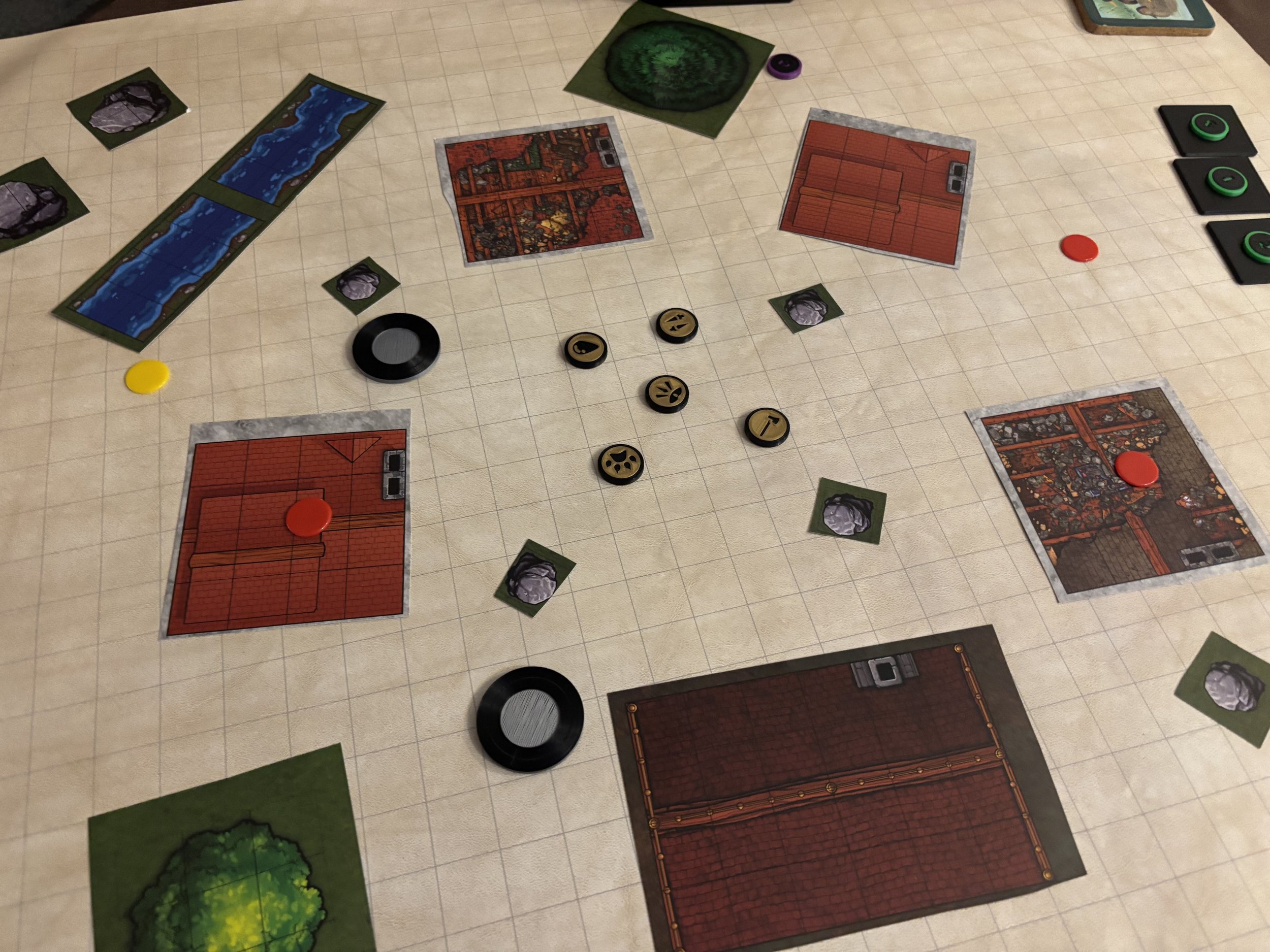
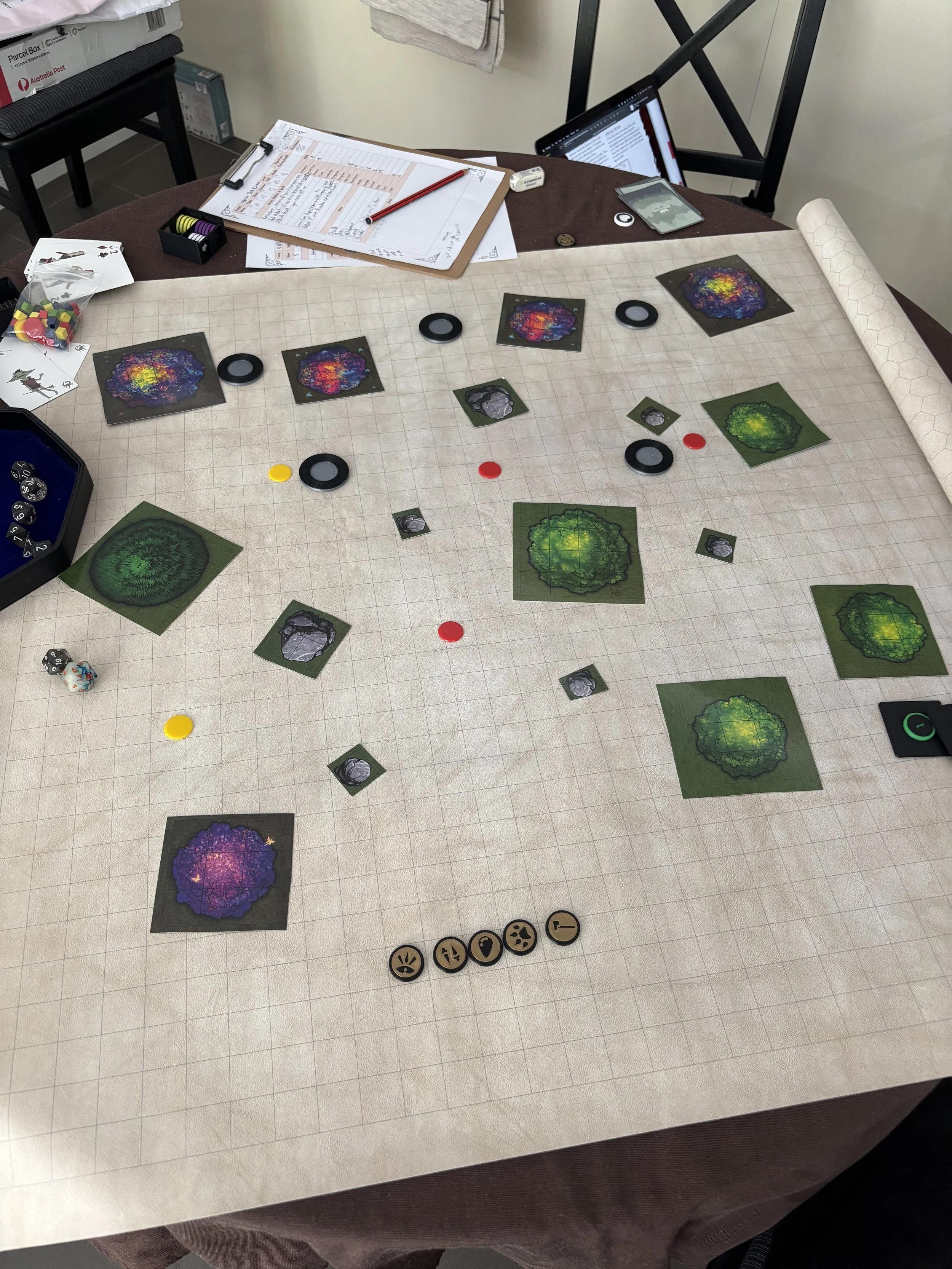
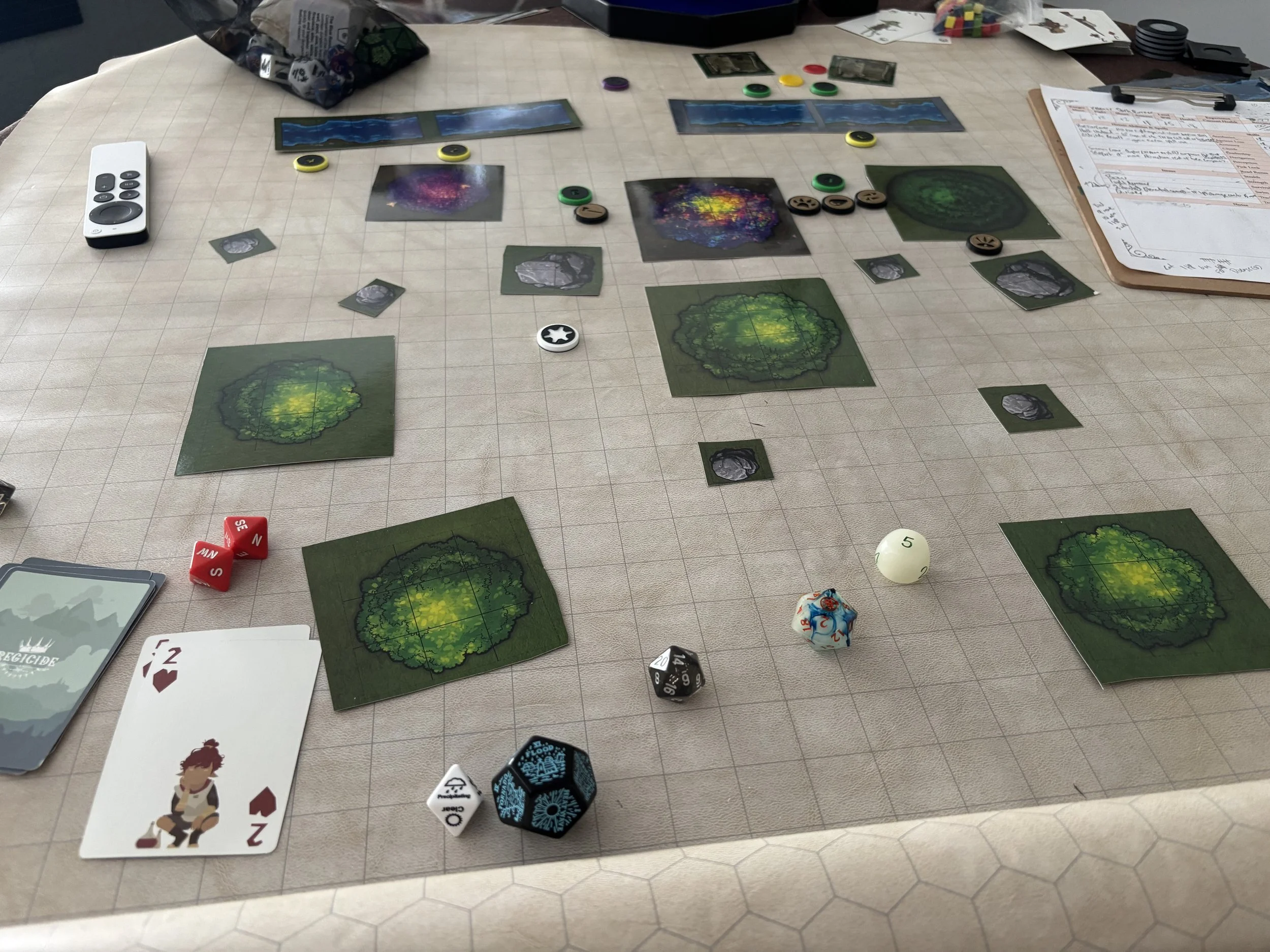
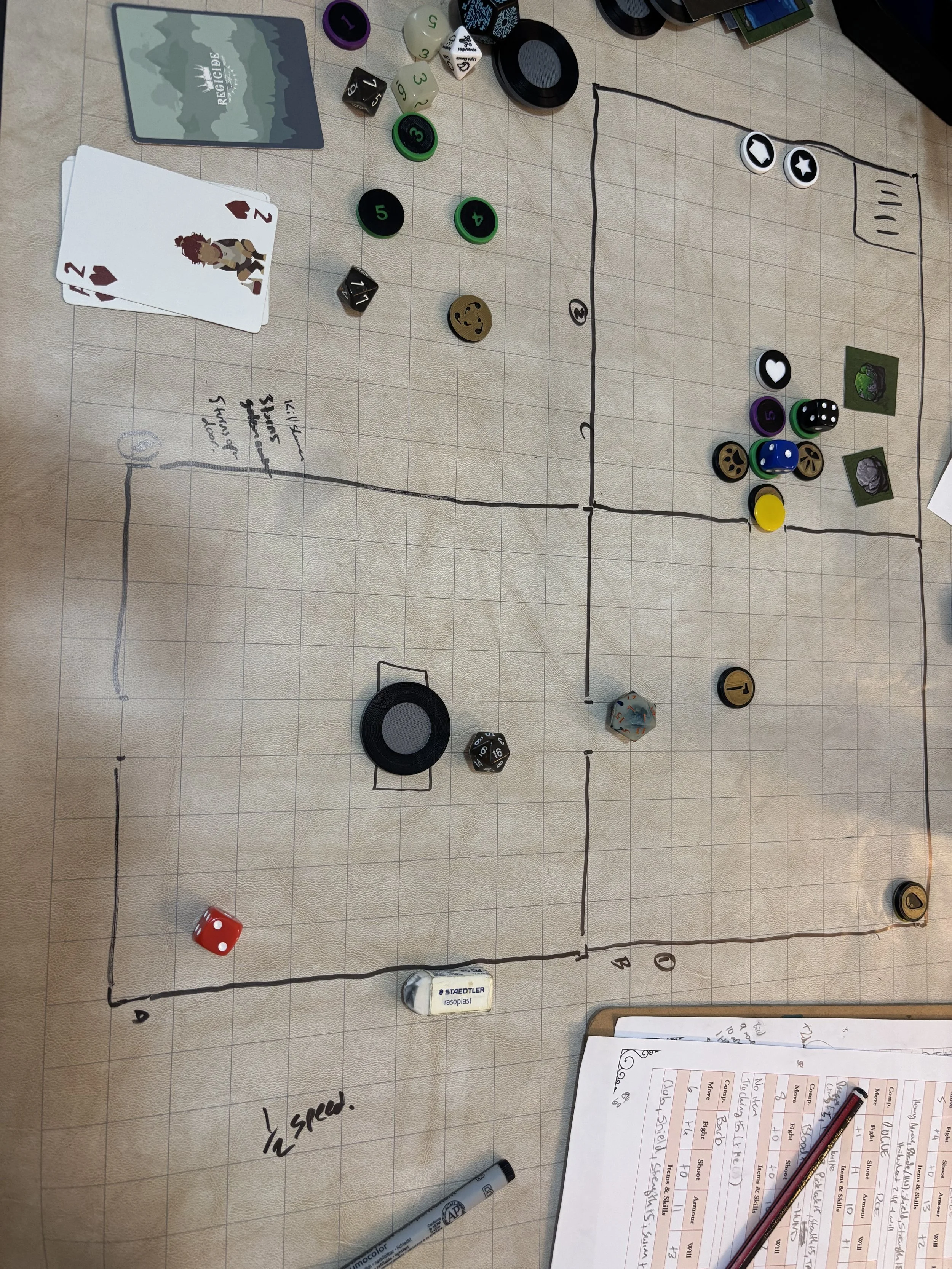
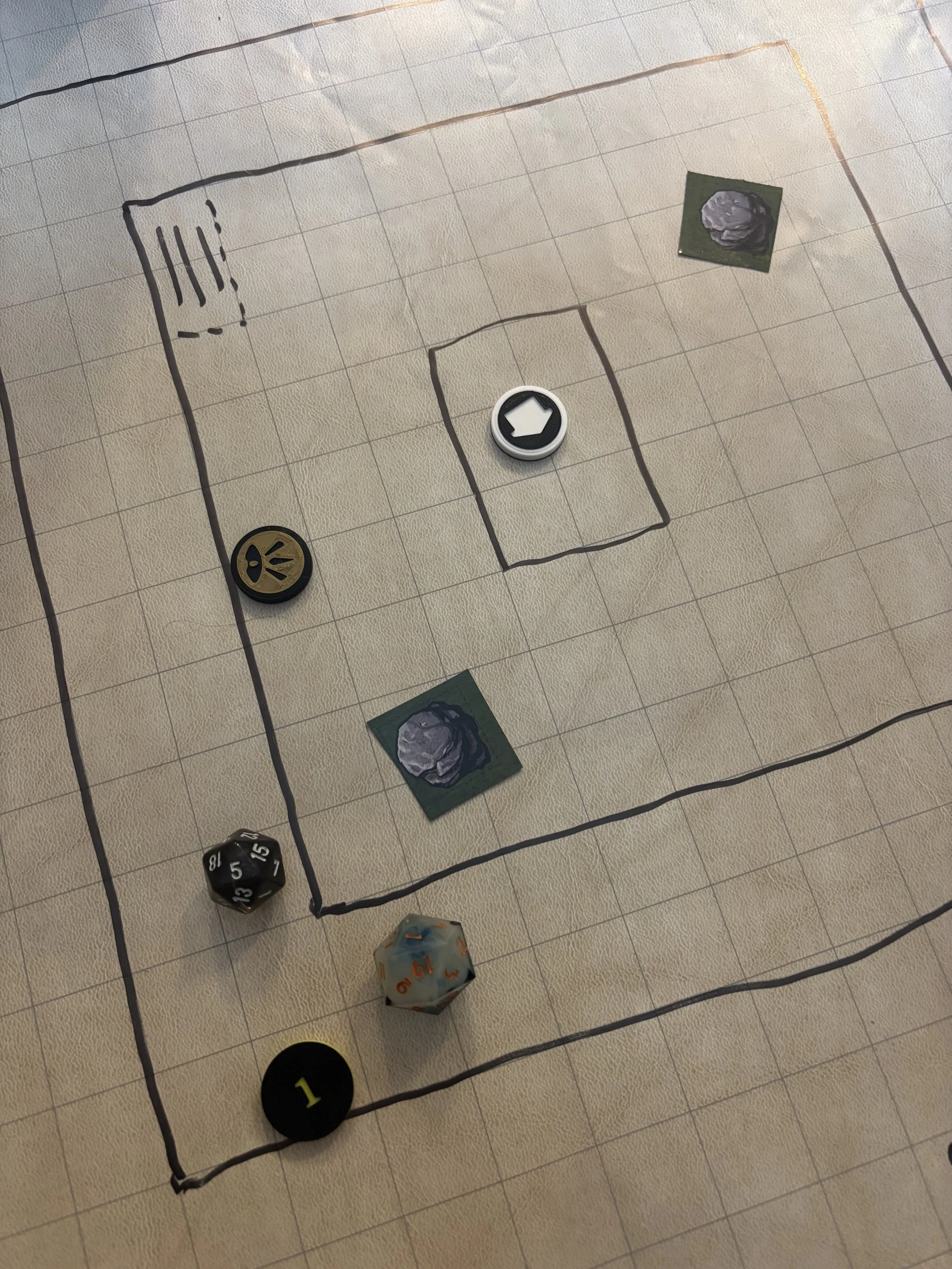
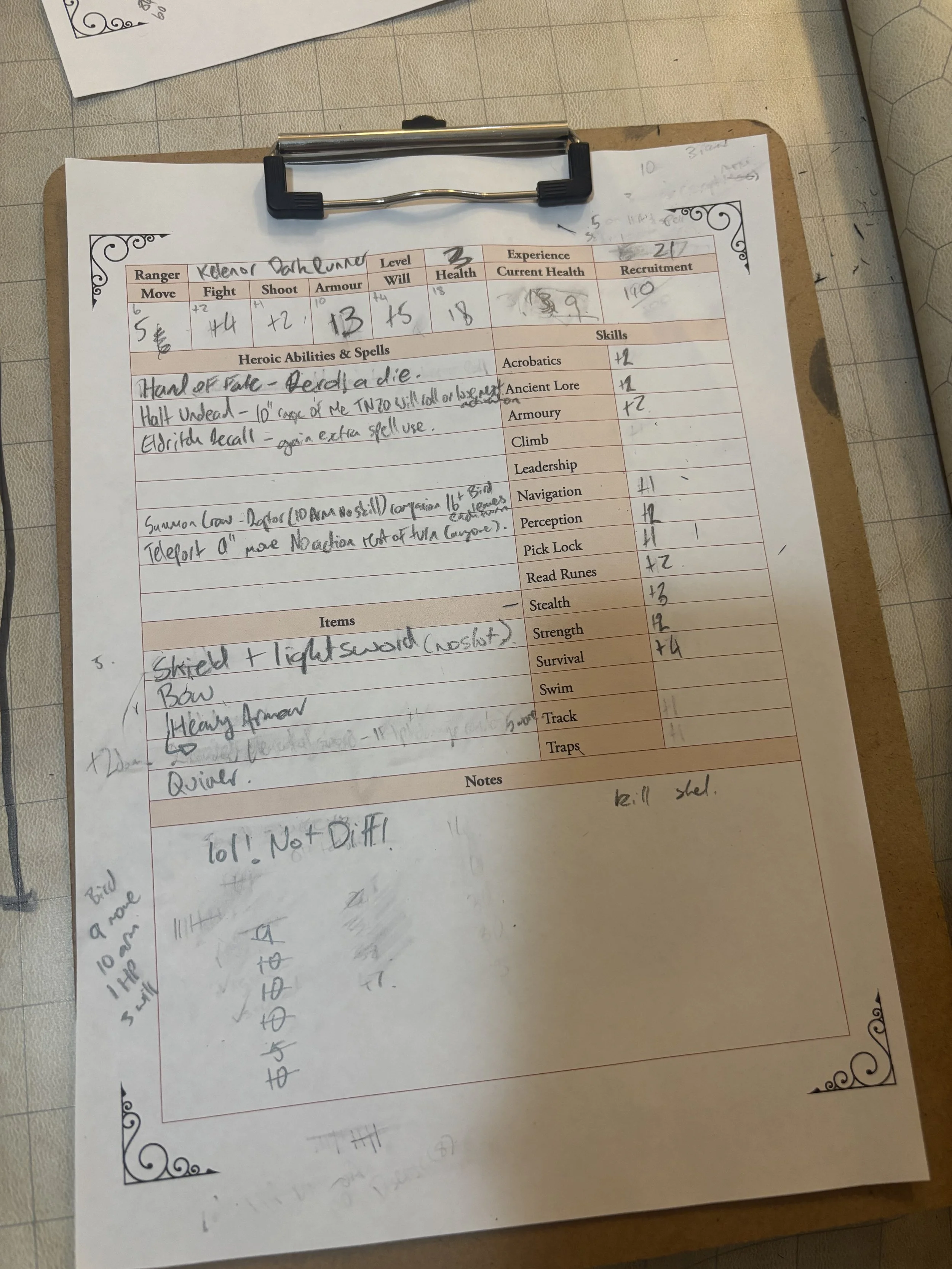
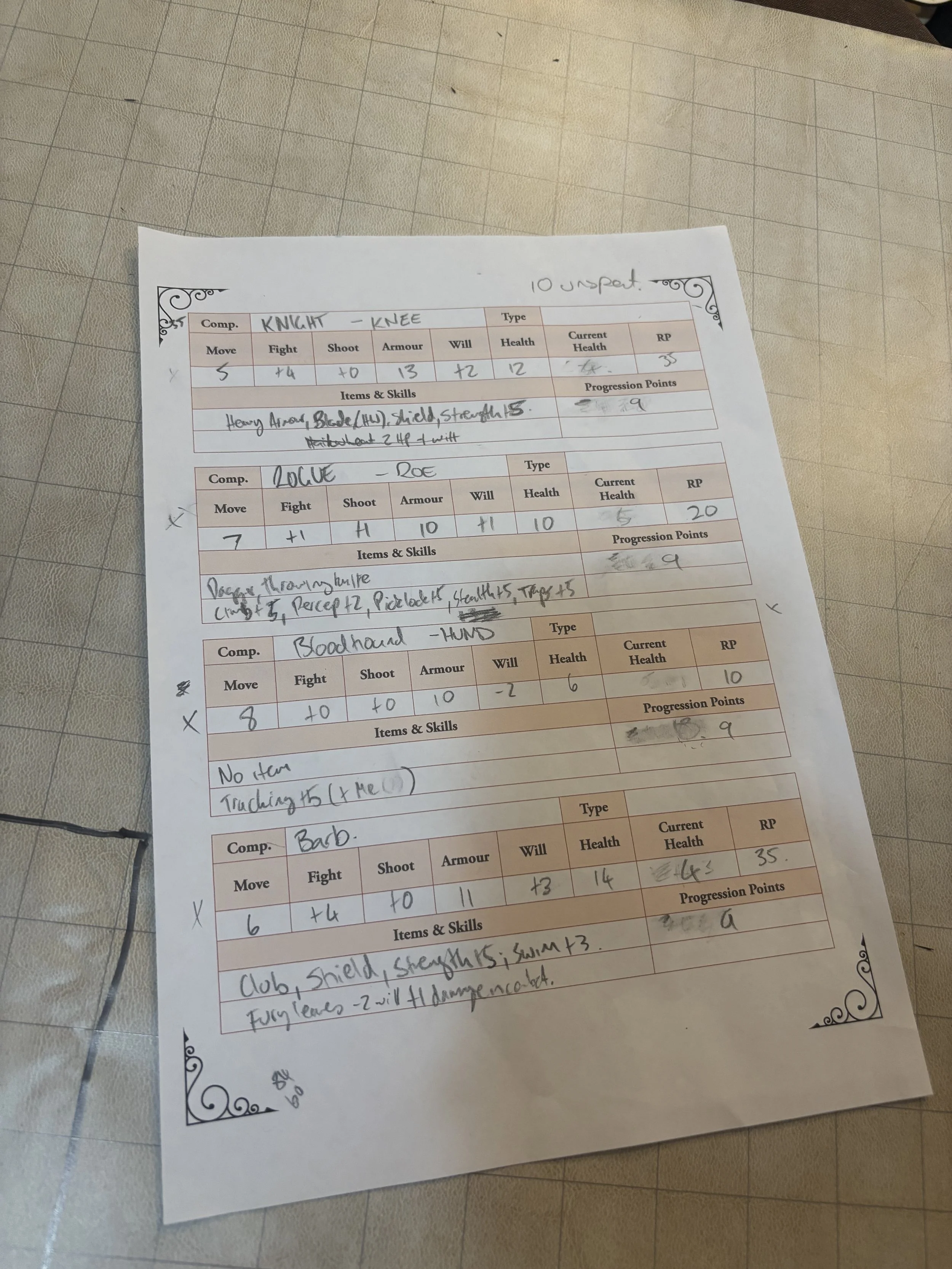
This weekend I have been playing Rangers of Shadow Deep, a solo/coop skirmish game. In this blog post I want to talk about my feelings of the game and character creation and the first few missions that I played.
Character Creation
Starting with character creation, I really liked the simplistic rules of assigning 10 point buy points across all the different facets of character creation. The game did a pretty good job of walking you through what was core and what was not. Although, I did feel a little bit overwhelmed at some of the choices. I think a game lives and dies by the number of choices it presents and whether it's supposed to be too fiddly or super involved in character depth and progression. Some people will prefer a game with many deep choices such as in the world of tabletop role playing games, something like Pathfinder 2E, and some people will prefer something a lot more streamlined, such as Magical Kitties Save the Day. As you can probably tell based on my development of Rift Walker, I land somewhere in between. I want there to be some choices so the characters are mechanically different from one another, but I also don't want there to be too many lists, because that often leads to things like trap choices and really, you spend multiple hours creating a character and then you don't even want to play by the end, because too much time has been eaten up. This is especially important in a solo game, where getting it to the table as quickly as possible is essential to making the game feel fun. When there are so many things that you could do with your spare time by yourself, it can feel hard to get these kinds of games to the table. That's why I think the character creation in this is fairly streamlined and strikes a good balance. I do want to note that sometimes it felt like I wasn't sure where to put my points. For example, is it better to put more points into recruitment to allow for more additional characters or should I up my own stats more? That was only found out through play and I would have liked to have maybe seen a quick build guide for a character with different archetypes. For example if you want to play a heavy spellcaster do this, if you want to be an Archer or predominantly a melee character try this. A quick build that would be super useful for someone like say, my partner if she wanted to play the game. I would have to do that work for her, because that many choices would be too many for her.
In the end I decided to go on with somebody who would be mainly melee with a little bit of ranged capability. In terms of spells, I picked utility spells such as summoning a crow and teleporting. My heroic abilities were mostly defensive. I would come to find out later that I would switch one of them because it was slightly too situational. I think you should be allowed to do these things, even if the book gives you specific rules on when you can and cannot exchange your heroic abilities. In my game, it's not like I was doing them between every mission for optimization, I just found that some of them were extremely situational and there seemed to be other ones that were a bit more universally applicable. On that note some of the heroic abilities are written in a way that is slightly vague. There's one that lets you re roll the dice, that's all it says. Is that every turn? Is that every attack? How many times can you do it? When looking at the Board Game Geek forums, there was a little bit of diversity in opinion on this matter. To be honest I kind of like this game design approach where they just give you something and then really, as the solo or cooperative player, you just must decide a precedent and move on. It helps keep rules very streamlined. I don't want to see pages and pages explaining when you cannot and can-do certain things. While there are certain chapters of this book that I feel laying a little too heavily into this, overall I would say it's pretty good on the character creation front. I took some basic recruits with me including a bloodhound, a knight a barbarian and a rogue and off I went on my first adventure.
The Rules
I love how quick the rules are to play in practise. They really lean into the coop and solo nature of this game by making resolution very fast. The fact that the defender in any given round can cause damage to the attacker is a great strategic element that makes you really decide how you want to engage things. Like deciding whether to sneak and take arrow shots at someone to take them out while around the corner from other guards. This is a great choice to make. The sorts of spells you cast can really change the battlefield, and the limited nature of spellcasting makes each one feel unique and special. There were times where I summoned a crow to engage with an enemy just so that it wouldn't keep shooting arrows at me. There are elements of this game that I find revolutionary in the skirmish game world. An example is not being able to shoot into a melee engaged combat really incentivizes close combat, whereas in a lot of other games ranged combat is king. I like that when you're taking the simple longbow, the range is huge but also you don't have to worry about any fiddly bonuses or reloading arrows. But, there are more fiddly options like the crossbow if you want to take them.
I do have something to admit though. It took several missions of playthrough before I realised I was playing the attack and defence rules wrong. I thought that it was the difference between the attack and defence was what armour was then subtracted from. I kept feeling like most attacks were missing on either side and then you'd have to roll the huge difference. It was only after watching an actual play from Map Crow, where I realised that combat was going really fast and that most enemies were dying in one or two hits, that I re read the rules and understood what it meant. I think a lot of that comes down to the fact that when you're a solo player and you're reading a lot of rules and then trying to internalise them, while trying to internalise character abilities and your companion abilities, means that you can miss things. I know I definitely do, while others mileage may vary. I think the game does a fairly good job of giving you things like a list of how actions resolve. I also think that there is some streamlining that they've done to make things quicker like companions being fairly straightforward, maybe with one or two skills attached to each and not being bogged down with many different heroic abilities. On the note of companions, I found that they were good in taking up hits and engaging the enemy to try and swarm them to get that bonus. But, there were some that I found I didn't really understand their use. For example the bloodhound can't run and use its speed to in pick up treasure. But I guess it can be used to save allies when that specific event comes up? Their low hit points meant that they would die within one or two hits. So, I guess there's still some more there to be done in terms of digging down deeper into the rule set for me to personally understand each of the companions used. I deliberately stayed away from using something like the conjurer because I wanted to streamline my approach in how I played. But, I already thought I had a lot going on. The enemies had good variety. I think the beginning enemies in the first scenarios were weak enough that you felt like you could progress, while being dangerous enough that you did take damage. Overall, I find the rule set very inspirational in how quick it is. My only minor criticism is that some of the rules are a little bit fiddly. I think disease, poison and things like that; while thematic, add a layer of complexity that could be streamlined into one condition. It also seems to be a bit overwritten in some sections which can lead to feeling like you need to skip those and come back to it. I feel like if I had the physical book, it would have been much easier to flip back and forth between them. I found I had to open 2 versions of the PDF when playing one on the monsters and one on the scenario.
The Missions
I played a lot of the campaign in the first part of the core book. (I have the PDF of the deluxe copy). I played the first two full missions through with each of the scenarios. There was some good variety there in the enemies and situations. I like how it culminated in a good tower battle with a larger scarier enemy. Things like finding magic items along the way and having them have limited use really made you decide when you wanted to use them. They were massively impactful when you decided to use them at clutch moments. I think a game like this lives and dies by the sorts of scenarios that it has. From what I've read so far, they're quite good. I really like the event card deck in most of the scenarios that meant things were different. I also like that when you found treasure or found clues that they were on a roll table. They really made you want to collect them. Making you want to unlock those other options that you could see on the page. The main thing I was confused about was when to make hostages and the heroes run off the map to safety. Like it felt wrong to let the villains live, when they were usually very evil. I think gaining XP was usually pretty good and the progression of the companions, (mine was a little bit wonky as I told you halfway through I realised I had been playing it wrong), so the companions lived most of the way through. It did make that last encounter very difficult realising what the sorts of rules were. It was very deadly having things like that will roll that you need to make when a tower on the other side of the battlefield is a lit in green flame, that can make you lose an action every turn. This is absolutely brutal. The skeletal knight only taking half damage is a great kind of mini an boss for those missions. I lost a bunch and had to replay it over and over to succeed which felt great. I think I was meant to take permanent critical wounds or whatever, but I didn’t worry about that. I look forward to playing more of them, and digging in more.
Terrain, Setup and Miniatures
In order to get the game quickly to the table, I decided to use very simple terrain miniatures and accoutrement in my setup. I used my Chessex battle map, my wet erase markers, my generic tokens and my Dungeon Craft terrain pieces. This facilitated quickly giving the vibe of the layout. I often found myself doing a 2 for 1 for the size of the squares because otherwise it would just be too big, and I didn't really want to extend my table. I found this approach really good. It made it so that I could play very fast, especially between different missions. While of course if people have amazing miniatures and terrain this game would be even more thrilling. The 3D aspect would be more visually appealing. I do think that playing it in this simplistic way, especially solo, is the way to go. If I was to play this cooperatively with my partner, I think it would be worth bringing out my Heroscape terrain and miniatures to really liven up the battle. I think it could make the experience even more exciting. I just wouldn't go through all that effort just for myself.
In a lot of ways, I've always wanted to find a way of playing Heroscape cooperatively. While there are some rule sets online, I think a lot of them are quite fiddly, especially in the monster AI. This game has absolutely magnificent monster AI. A very straightforward manner in which, they will find the most efficient way to attack the Ranger. If they can't attack the Ranger, they will attack a companion, and if they can't do any of those, they'll make their way there. If they haven't seen the heroes, they will move in a random direction or move to a designated target point. Very straightforward. I think this is a way I would play Heroscape cooperatively. I could see using this AI, or just using the characters and their abilities/dice, with these scenarios. I had fun using some of my strange dice like weather, when it came up in an event card, my random direction dice for enemies and even my weird number (d5) dice. I highly recommend!
Overall I find this game very fun I think it's still worth playing, even though the game is more than 10 years old now. A lot more is to be done in terms of playing through other missions and building new characters. I want to see how my companions level up! I think a lot of fun could be had, doing this cooperatively. That'll be my next endeavour in playing this. I might write about it again there when that happens.