Adventure Structure Preparation Shapes
The Premise
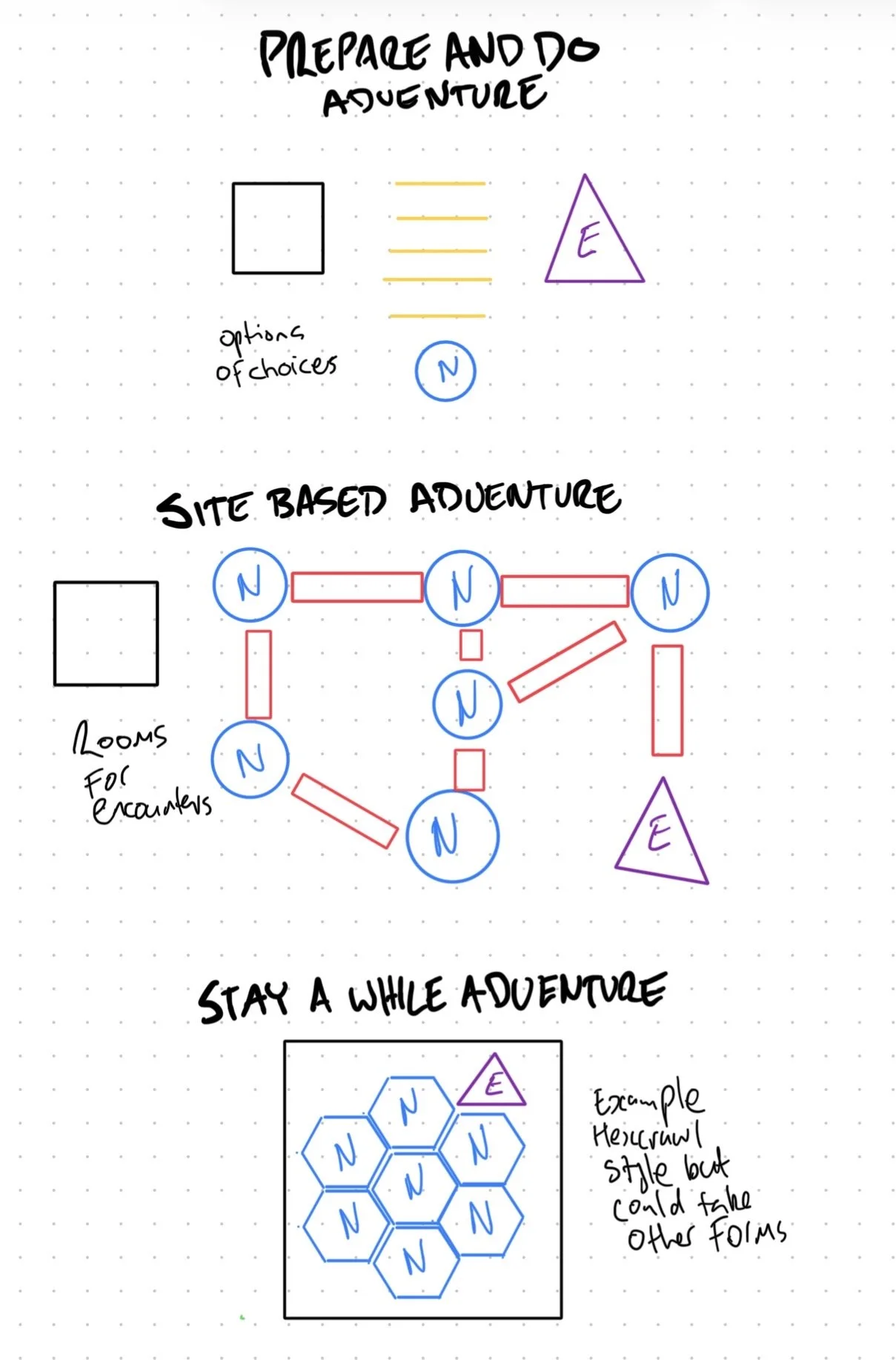
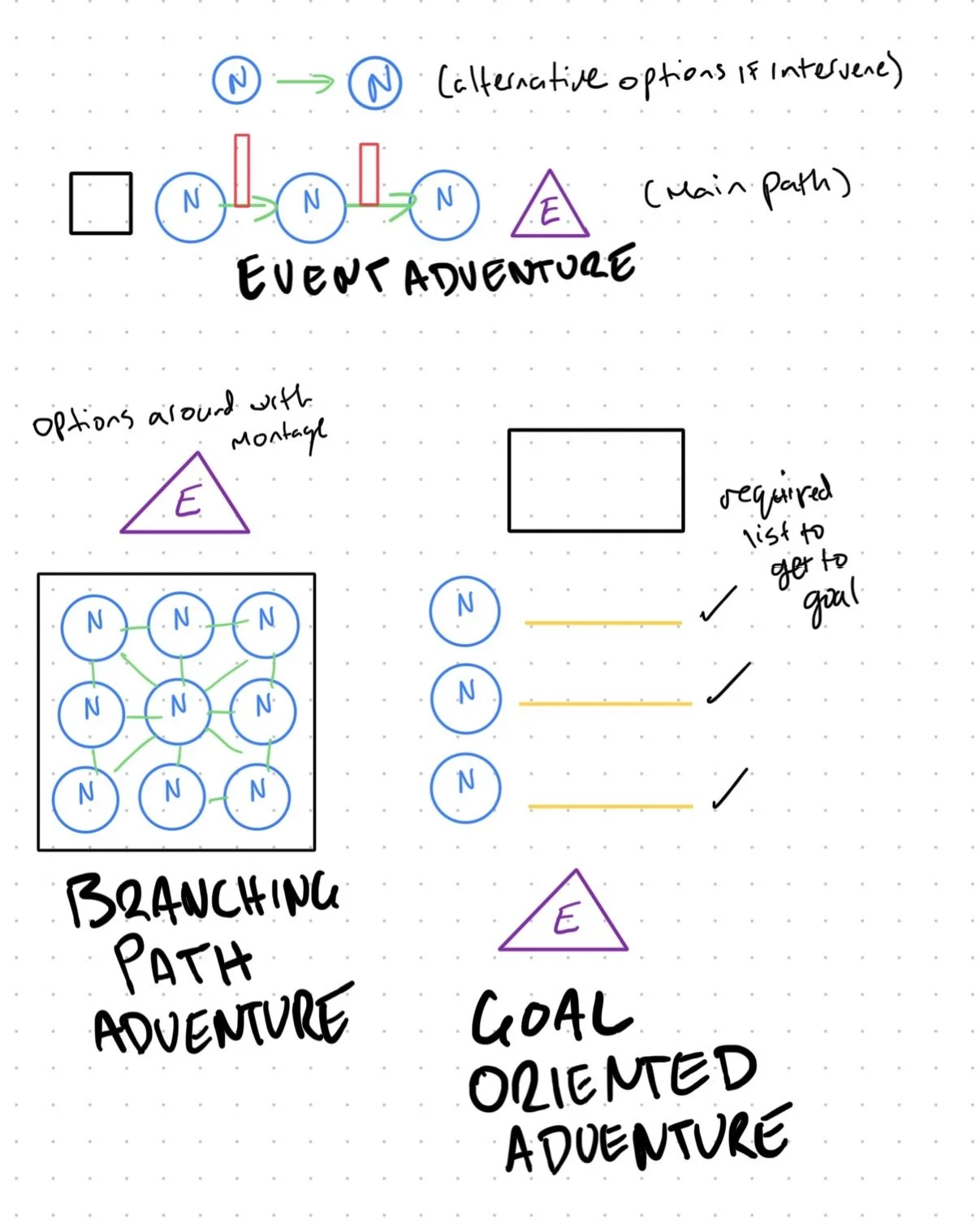
In continuing my work on the topic of adventure structures and preparation. First, regarding the Rift Walker Evocative Adventure Structure. This was further developed in my work on preparation structures. And finally a piece of work I did on the only 6 adventure types a GM needs. Make sure this last link is read before this one, as it outlines the use of the adventures and the overview of them. What I am writing about today, is a further addition to my prep information. I seek to create shapes that will help a GM of any system that use the six preparation structures. These shapes will determine where encounters will go as per outlined in the evocative adventure structure. My one to 6 preparation structure strategy fits into this by telling a GM that they need to create a handful of certain encounters; i.e. montage, narrative and extended encounters. Wow this is specifically useful in my goals of writing an excellent Rift Master section for my upcoming game Rift Walker. I find that this would be useful to a lot of GM of any sort of heroic game. I want to address the fact that of course any of these can be altered which I discussed more below. I also want to address the idea that this could come across as over preparation or in some peoples eyes “railroading”. This dreadfully overused term can be stifling for a lot of new game masters. The fear is that if they do any amount of preparation beyond the most basic outline that they are taking away agency from players this is simply not the case in my premise below the shapes are there to give you a rough idea of where these encounters could take place, of course any of these encounters could be moved or any elements from any of these encounters could be moved to other points. The purpose of something like this is game masters that basic preparation and outlining is essential to the smooth running of any game night. Of course if you are a heavily improved base GM then you can take what you like and ditch the rest from the structure if you are into more of a basic list of ideas that could be applied to any situation to create a more free-flowing encounter basis for your players. I suggest that you read, my preparation structures linked above that outlines the basics of any given session.
Influences
I have to give credit to 2 specific authors who have helped shape my ideology around TTRPG preparation, and how I write adventures for the use of my players and publishing.
The first is Hakerin Fernale from RuneHammer Games. His excellent work across both Crown and Skull and more specifically, Index Card RPG; have been heavy influences on the way that I draw and shape my ideas. Overall his much relished format of drawing journaling and writing by hand have heavily influence the ways I structure my games. One day I hope to have a GM section as good as the one found in Index Card RPG. His Patreon offers a podcast series that is top-notch in theorising about TTRPG's. I am also a fan of his YouTube work where he discusses specific adventure structures.
The second is Mike Shea from the Sly Flourish book series. His book return of the lazy dungeon master lays out a number of preparation strategies which I have morphed into my own. I am also huge fan of his blog and his YouTube series where he talks about things like structures and TTRPG's that open my eyes to these formats of adventures. While I was doing them before in my home games, I never knew had a specific structure or name attached to them.
The Shapes
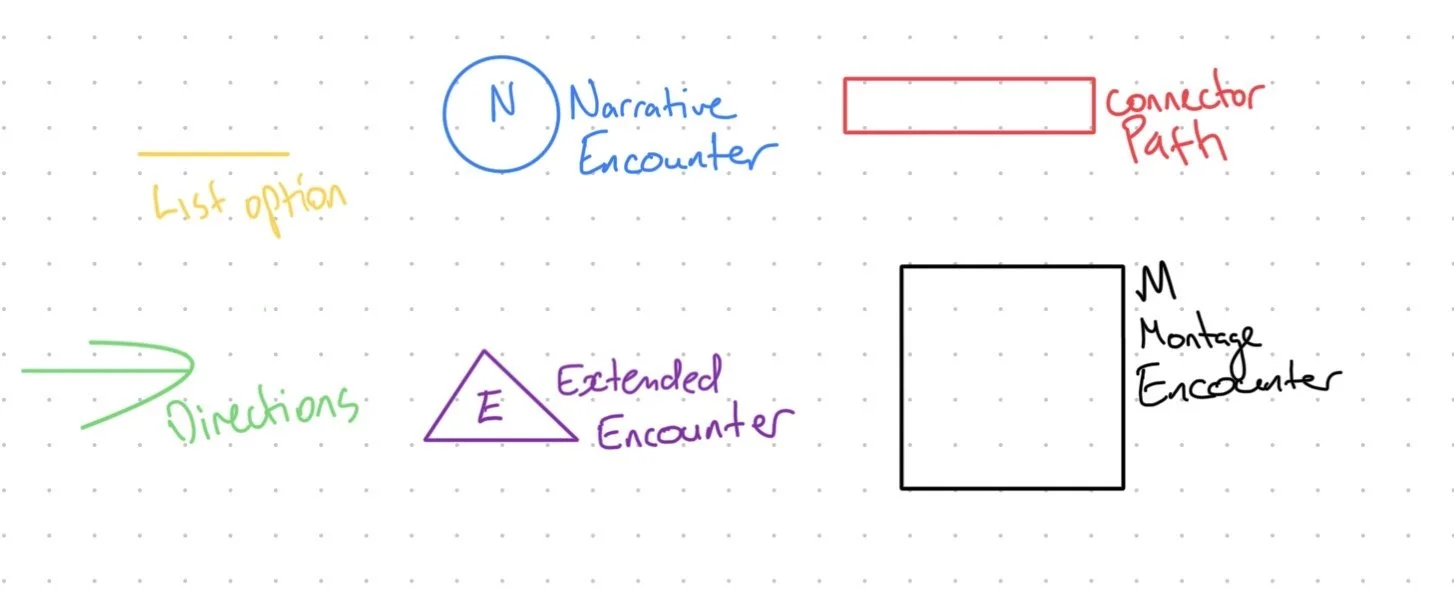
Below I outline the specific shapes in the form of a flow chart, for each adventure structure. The key below, outlines the types of encounters that would be most appropriate in each of these shapes. Of course, any of these can be adapted or altered. This is here to just develop the basic shapes to get the ideas flowing as a basic starting point.